The value in the question
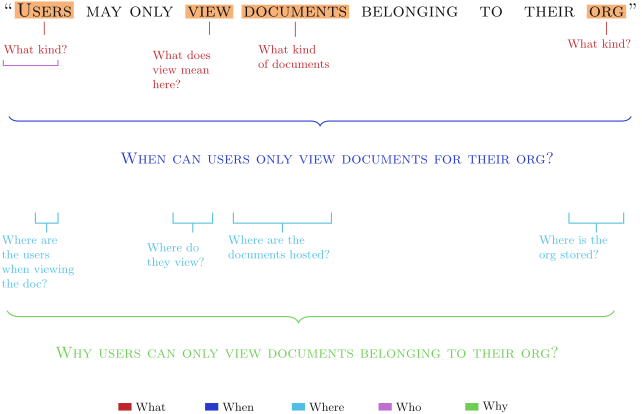
As intelligence and labour become commoditised, what is left?
I believe it can be broken down into two things
- How you articulate the current state
- How you articulate what you want
Notice how articulation is the common thread between the two.
Communication underpins every decision we make, yet it remains intensely fragile.
Misinterpretations and miscommunication happen all the time.
Communication is not really uniform. It’s expressive, and that’s how it should be, as it allows for creativity.
But this freeform nature can also allow it to be sloppy.
I believe in order to communicate well, you need to first understand the current state, and secondly understand where you want to go.
Both require judgement and taste.
Both judgment and taste get built over time from doing the work that no one else wants to do. Approaching uncertainty head on, questioning how it’s always been done and applying elements of ingenuity.
At the very fundamental level it’s just doing the thing and not giving up, until you're satisfied with the outcome.
It turns out that the compounding effects of these challenges actually build an arsenal of tools that allow you to craft the right questions.
This is because you build experience, and your field of view widens. And with a wider view, you see things others don't see and catch things others overlooked.
When AI seems to be ‘all-knowing’. A path still needs to be made clear from your given position, to where you want to go.
That said, an AI can't do that on your behalf. Even if it can instruct another AI, it’s still doing work for the sole purpose that you – and the AI – are heading towards a shared goal. So if It doesn't align with your intent, it’s simply just spinning its wheels in vain.
And even if you were to provide it with intent, notice how in that very sentence, the dependency to do so is with how you articulate it.
Alignment of intent is the biggest challenge.
It's very easy for an AI agent to go down a wrong path and actually do more harm than good. Ending up with more work for us to do in the form of rework, or reading the poor code the AI generated… or worse, having to comprehend its esoteric way of writing.
And although a vast array of methodologies and techniques have arisen to tackle this – like context engineering, loops, delegation, orchestration and agents.
It's a direct solution to the responsibilities that AI will have to handle, but not the responsibilities of our own within this lifecycle.
Communicating intent.